Anion Gap Calculator With Corrected Chloride Method
How an anion gap calculator measures
An anion gap calculator is a medical tool used to calculate the gap between the key measured electrolytes in a basic chemistry panel. It is commonly calculated from serum sodium, serum chloride, and serum bicarbonate to help evaluate acid-base balance and detect an acid-base disorder. In real-world clinical interpretation, the result can point toward metabolic acidosis and help differentiate common causes from those driven by hidden acids in the blood.
The concept is straightforward, but the clinical meaning is more complex. A calculated anion gap reflects the relationship between measured cations and measured anions in an electrolyte panel. When the gap is high, it may suggest the presence of unmeasured anions, such as lactate or ketoacids. When it is normal, the problem may instead be loss of bicarbonate with a matching rise in chloride. That is why the chloride level is so important to clinical interpretation.
An anion gap calculator is especially useful because it turns raw laboratory values into useful insight. It supports patient assessment by organizing a set of numbers into a pattern that may indicate an electrolyte imbalance, a metabolic disturbance, or a more specific disorder that needs further workup. In many cases, the calculator also helps clinicians notice whether a seemingly normal result is hiding a meaningful anion deficit.
Why corrected chloride plays a role in acid base interpretation
Corrected chloride provides another degree of accuracy to acid-base balance evaluation. The recorded chloride level can be misleading when albumin is out of range, especially in hypoalbuminemia. Because albumin is a key unmeasured anion, a low albumin concentration can lower the expected anion gap and alter the apparent relationship between sodium, chloride, and bicarbonate. That means a raw chloride number may not tell the whole story.
In many patients, the goal is not only to calculate the anion gap but also to interpret whether the chloride is appropriately aligned with the rest of the serum electrolytes. If albumin is low, the calculated gap may look falsely reassuring. A chloride correction helps modify the interpretation so that the result better reflects the underlying physiology rather than the distortion caused by protein changes. This improves diagnostic accuracy and supports more reliable interpretive guidance.
This matters most when looking for metabolic acidosis. A patient with hypoalbuminemia may have a masked increase in the gap because albumin normally contributes to the total negative charge. The result is that the apparent normal gap may mask a true increase in acids. Correcting chloride, or more broadly adjusting for albumin-related effects, can uncover a hidden problem and improve clinical interpretation.
Corrected chloride is therefore not just a math calculation. It is part of a broader interpretive process that helps clinicians judge whether an abnormal lab pattern is due to dehydration, renal dysfunction, GI losses, or an acid load. In this way, the correction supports better recognition of the underlying acid-base disorder.
How to operate an anion gap calculator for adjusted chloride
Using an anion gap calculator for adjusted chloride relies on the right input values. At minimum, you need serum sodium, serum chloride, and serum bicarbonate. If the calculator includes albumin adjustment, you also add albumin. These values are usually drawn from a recent electrolyte panel and, when available, matched with blood gas analysis for broader clinical context.
The standard calculation formula for the anion gap is often:
Anion gap = Serum sodium − (Serum chloride + Serum bicarbonate)
https://anion-gap-calculation.com/calculators/anion-gap-with-potassium.htmlFor corrected chloride, calculators may apply a separate chloride correction or an albumin adjustment depending on the method used. The corrected value is then compared with the reference range or reference interval to see whether the chloride is contributing to an expected or unexpected acid-base pattern. A result within range does not always mean normal physiology; it must still be interpreted in the setting of the whole clinical picture.
Here is a practical way to use the tool:
- Enter the measured serum sodium.
- Input the measured serum chloride.
- Enter the measured serum bicarbonate.
- If prompted, enter albumin to obtain an albumin-adjusted or corrected value.
- Examine the calculated anion gap and compare it with the reference range.
- Use the result with other findings from blood gas analysis and the rest of the laboratory values.
When used carefully, the calculator becomes a practical diagnostic tool rather than a standalone answer. It helps identify whether the pattern is consistent with a simple electrolyte shift, a metabolic disturbance, or a more serious acid load that needs further evaluation.
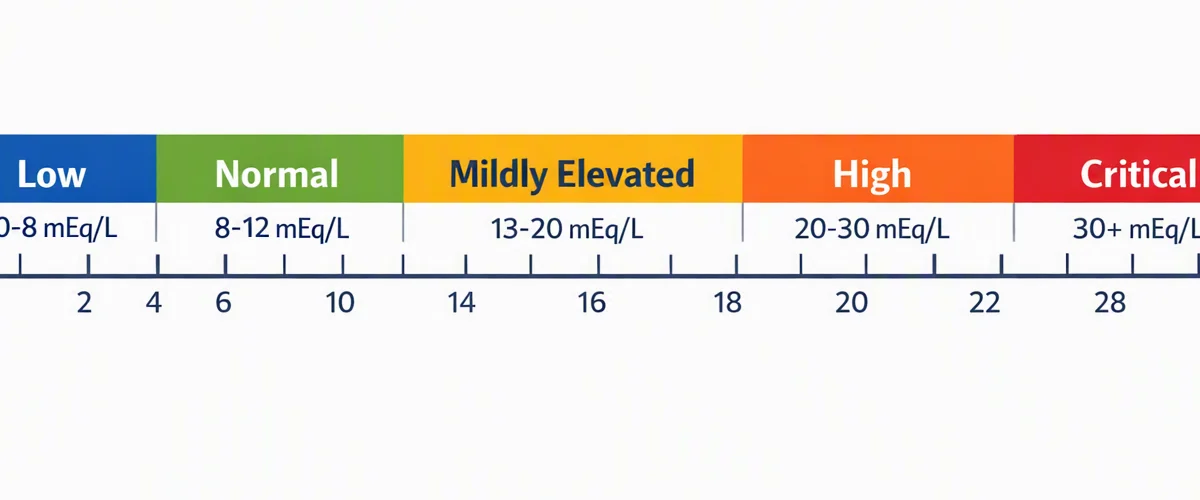
Adjusted chloride formula and step-by-step illustration
The specific chloride correction formula can change by provider or calculator setup, but the main concept is to modify the assessment of chloride when albumin is not normal. Some calculators emphasize an albumin-based correction to the anion gap, while others display a corrected chloride to help outline the acid-base picture. In either case, the goal is the same: allow for the effect of hypoalbuminemia on the measured balance of charges.
A common albumin correction concept is that lower albumin can mask an elevated gap. Many clinicians use albumin-adjusted interpretation as part of the larger chloride correction approach. A basic step-by-step workflow looks like this:
- Obtain the laboratory values: sodium, chloride, bicarbonate, and albumin.
- Compute the initial anion gap using the calculation formula.
- Evaluate whether albumin is low enough to affect interpretation.
- Perform the albumin correction or chloride correction method used by your calculator.
- Compare the adjusted result with the expected reference range.
- Reassess for acid-base balance issues, including possible unmeasured anions.
Worked example: imagine the following laboratory values are available from a routine panel. Serum sodium is 140, serum chloride is 104, serum bicarbonate is 22, and albumin is low. The initial anion gap is:
140 − (104 + 22) = 14
If the albumin is reduced, that apparent gap may minimize the real acid burden. A calculator that applies albumin-adjusted interpretation may indicate a greater corrected result, which can move the interpretation from a borderline normal pattern to a clinically meaningful elevation. That shift may uncover hidden unmeasured anions and help define the disorder more accurately.
That is why a methodical approach is important. This corrected value is more than a figure; it serves as a more accurate picture of the patient’s actual acid-base problem. Using the chloride correction calculation in addition to the initial anion gap, clinicians obtain a better idea of whether the abnormality is genuine, hidden, or combined.
How modified chloride affects anion gap interpretation
Corrected chloride can change how a result is interpreted in both standard anion gap metabolic acidosis and increased anion gap metabolic acidosis. If the chloride is corrected upward or lower based on albumin-related effects, the balance between chloride and bicarbonate may look different enough to change the differential diagnosis. This is especially valuable when a patient has a complex metabolic acidosis and the raw numbers do not clearly fit one category.
In standard anion gap metabolic acidosis, chloride often increases as bicarbonate falls. The corrected chloride helps determine whether the high chloride is truly compensatory or whether the measured value is skewed by protein abnormalities. In elevated anion gap metabolic acidosis, the main issue is usually unmeasured anions, and a corrected interpretation may reveal that the gap is more elevated than it first appeared.
The delta gap is another helpful concept. It compares the rise in the anion gap with the fall in bicarbonate to look for mixed disorders. Corrected chloride can sharpen that analysis by reducing the risk of misreading the chloride contribution. If the gap is more abnormal after correction, the clinician may look harder for lactate, ketones, toxins, or other causes of hidden acid accumulation.
Ultimately, corrected chloride improves the signal-to-noise ratio in clinical interpretation. It does not replace judgment, but it makes the lab pattern easier to read. That is important in identifying whether the pattern reflects a simple chloride shift, a mixed disorder, or a dangerous acid load requiring urgent treatment.
Typical causes of abnormal chloride and anion gap results
A number of common conditions can affect chloride and the anion gap at the same time. Dehydration can concentrate serum values and cause electrolyte disturbances more obvious. In some settings, volume depletion alters the relationship between sodium, chloride, and bicarbonate enough to alter the apparent acid-base pattern. A careful review of serum electrolytes and volume status is therefore necessary.
Renal failure is another major cause of abnormal results. When kidney function declines, acid excretion is impaired and acids may accumulate, leading to high anion gap metabolic acidosis. At the same time, shifts in chloride handling may complicate interpretation. This is one reason why a calculator that incorporates corrected chloride can be so useful in the assessment of a broader acid-base disorder.
Lactic acidosis is a classic cause of elevated anion gap. Lactate is an unmeasured anions contributor that can elevate the gap even when chloride appears unremarkable. If albumin is low, the abnormality may be more significant than it looks. Corrected chloride can help prevent underestimation and support earlier recognition of severe illness.
Diarrhea more often causes normal anion gap metabolic acidosis because bicarbonate is lost through the gastrointestinal tract and chloride rises in response. That makes chloride interpretation especially important. If the measured chloride is changed by albumin status or other factors, the clinician may misclassify the disorder unless a corrected approach is used.
These patterns illustrate why the same electrolyte panel can mean different things in different patients. The right interpretation depends on the broader metabolic picture, the presence of metabolic acidosis, and whether the result fits with the underlying clinical story.
Restrictions and medical considerations
Even the best anion gap calculator has limitations. One issue is laboratory variability. Subtle differences in measurement methods can affect the apparent chloride level, bicarbonate value, or final gap. That means a result should be viewed as a laboratory result with inherent measurement variability, not as an exact value. The reference range can also differ by lab method and instrumentation.
An additional important limitation is that arterial blood gas results and chemistry panel values are not always perfectly aligned. A full blood gas analysis may show pH and CO2 patterns that provide important corroboration or contradiction. If the blood gas and chemistry values do not match, the discrepancy itself can be significant and may suggest a mixed disorder or sampling issue.
Serum albumin is essential to interpreting corrected chloride, but albumin alone does not explain every abnormality. Other factors such as medications, fluid status, kidney disease, and ongoing acid production may influence the results. For that reason, clinical context should always guide the final interpretation. A corrected number is only one piece of the diagnostic puzzle.
It is also important to avoid overreliance on a single threshold. A seemingly mild shift in the anion gap may be important in one patient and trivial in another. The same is true for corrected chloride. Decisions should be based on the full picture: symptoms, history, physical findings, serum electrolytes, and any evidence of evolving acid-base balance problems.
In proper use, the calculator improves diagnostic accuracy and supports better patient assessment. If used alone, it may oversimplify a complex situation. The best approach is to treat it as a guide for interpretive guidance, not a substitute for clinical judgment.
FAQ about anion gap and corrected chloride
What exactly is an anion gap calculator for corrected chloride?
An anion gap calculator for corrected chloride is a diagnostic tool that takes serum sodium, serum chloride, serum bicarbonate, and sometimes albumin to calculate the anion gap and account for chloride-related interpretation. It helps with clinical interpretation of acid-base disorders by revealing whether the pattern suggests metabolic acidosis, unmeasured anions, or another form of electrolyte imbalance.
Why do you need to correct chloride for albumin or other factors?
Chloride correction improves interpretation because low albumin, especially in hypoalbuminemia, can distort the apparent balance of serum electrolytes. Since albumin contributes to acid-base balance, a low level may mask a clinically important abnormality. An albumin-adjusted result can therefore increase diagnostic accuracy and make the corrected value more useful than the raw measurement alone.
How do you calculate corrected chloride step by step?
Start with the measured laboratory values from the electrolyte panel: serum sodium, serum chloride, serum bicarbonate, and albumin if available. Use the calculation formula for the anion gap, then follow the calculator’s chloride correction or albumin correction method. Compare the result with the reference range or reference interval and interpret it with any relevant blood gas analysis findings and the overall clinical context.
How does corrected chloride change anion gap interpretation?
Corrected chloride can reveal that a normal-looking result is actually abnormal once albumin effects are considered. This may change the interpretation from apparent normal anion gap metabolic acidosis to a hidden high anion gap metabolic acidosis, or it may clarify a mixed disorder using the delta gap. In short, it helps recognize unmeasured anions more reliably and improves the overall assessment of acid-base balance.
What conditions can cause an abnormal anion gap or chloride level?
Typical causes are dehydration, renal failure, lactic acidosis, and diarrhea. Each can change the anion gap and chloride level differently. A thorough review of the electrolyte panel, serum albumin, and blood gas analysis helps determine whether the pattern fits an acid-base disorder, a simple electrolyte imbalance, or a more complex metabolic disturbance.